Why Loggers' Workers' Comp Is the Most Expensive Policy You'll Buy (and How to Lower It)
By Josh Cotner
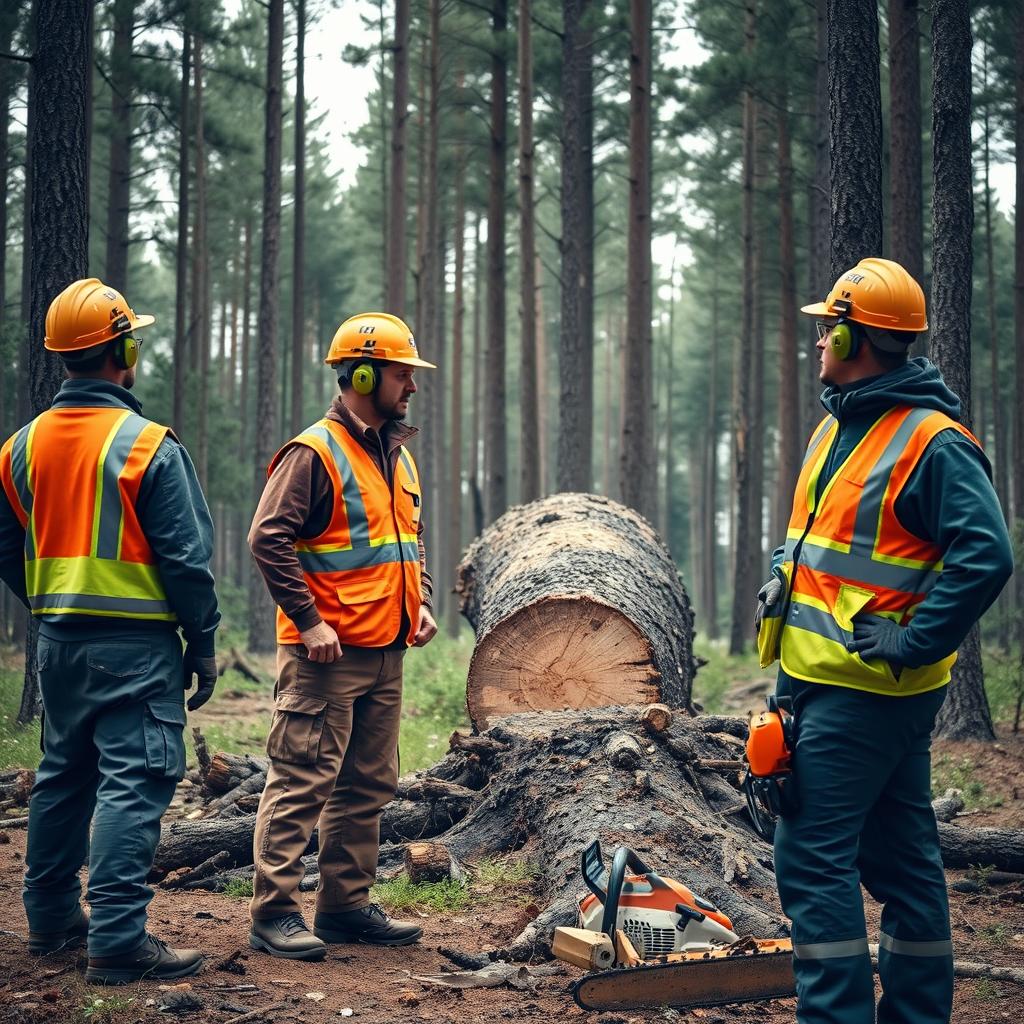
There's a reason most standard workers' comp carriers decline to even quote logging: it is, by the data, one of the most dangerous occupations in the United States. Struck-by-tree, chainsaw laceration, cable snap-back, equipment rollover — the losses are severe and they are frequent. Base rates for logging class code 2702 are among the highest in the entire workers' comp manual.
But "expensive" doesn't mean "fixed." The policy most likely to sink or save your logging business is also the one with the most leverage — if you understand how it's priced. Here's the actual mechanics, and the four levers that move the number down over time.
The three logging class codes
Workers' comp is priced by classification code, and logging has three you'll see on your policy:
- 2702 — Logging. Felling, bucking, limbing, skidding, yarding, and loading at the landing. The highest-rated of the three, and the one most carriers decline outright.
- 2710 — Sawmill or planing mill operations. The manufacturing side: the head rig, resaw, edger, planer, kiln. Lower than 2702, still well above a typical shop rate.
- 2712 — Logging road construction and maintenance. Building and maintaining the haul roads into the tract. Frequently misclassified as 2702 — and correcting that alone can move a premium materially.
Your payroll has to be assigned to the right code for each function. The most common (and most expensive) error we see is a single classification applied to an operation that actually spans two or three — usually 2702 applied to work that should be 2710 or 2712.
The experience modification factor (EMOD)
Your premium isn't just the manual rate × payroll. It's:
Manual rate × payroll × your EMOD
The EMOD is a multiplier calculated from your actual claims history over a rolling three-year period (with a one-year lag). A mod of 1.00 means you pay the manual rate. A mod of 0.80 means you pay 20% less. A mod of 1.30 means you pay 30% more.
For a logging operation with a sizable class-2702 payroll, a single point of EMOD is tens of thousands of dollars a year. There is no other lever in your insurance program — deductibles, markets, package credits — that comes close to what your EMOD does to the number.
How the EMOD is calculated (and why it lags)
The rating bureau (NCCI in most states; independent in a few) looks at your reported claims over a three-year experience period, compares your actual losses to the expected losses for a logging operation your size, and produces the mod. The math is weighted — severe primary losses move the mod more than small medical-only claims, and there's a "split point" below which a claim has less impact.
The lag matters: the mod you're rated on this year reflects claims from roughly three years ago to one year ago. A bad year follows you for three renewal cycles. Which is why getting ahead of it — not waiting for it to age off — is the whole game.
The four levers that actually move the mod down
1. A documented safety program
The underwriter (and the rating bureau) want to see that injuries are being prevented, not just paid for. Fall protection, chainsaw chaps and PPE, daily job-briefs, equipment inspection logs, cable and rigging inspection — documented. We help you build the binder the underwriter wants to see, because it translates directly into premium.
2. Prompt injury reporting
The single most expensive thing a small logging crew does with an injury is not report it. Late-reported claims cost more (treatment is delayed, severity climbs) and they look worse on the mod worksheet. Report within 24 hours, every time.
3. A return-to-work (light duty) policy
A claim stays "indemnity" (wage replacement) for as long as the worker is off work. The day they're back on modified duty, the indemnity stops — and indemnity is what moves the mod the hardest. A written light-duty program is one of the highest-ROI documents a logging contractor can have.
4. Aggressive claim management
Claims should be managed, not just paid. That means staying in contact with the adjuster, contesting questionable reserves (over-reserving inflates the mod), and pushing for claim closure when the worker is back. We're on the policy all term — not just at renewal — partly for this.
Why standard carriers decline logging — and who writes it
Most standard admitted carriers decline logging class codes on sight. The losses are severe and frequent, and the data shows it. The markets that write logging are a handful of A-rated specialty programs, regional mutual carriers, and in some states, self-insured group funds.
That's the value of a broker with direct appointments in the niche. Your submission goes straight to an underwriter who writes logging every day — not into a generalist queue where it gets declined on the class code alone. Contractors Choice Agency has those appointments, in all 50 states (yes, including the four monopolistic-fund states).
What to do right now
- Pull your current mod worksheet. Read it. Flag anything that looks wrong — a claim you don't recognize, a reserve that seems high, a classification code that doesn't match what you do.
- Confirm your payroll classifications. If everything on your policy is 2702 and you run a sawmill or build your own roads, you may be overpaying.
- Get a documented safety and return-to-work program in writing. Even a one-page version moves the conversation with the underwriter.
- Get a second opinion. Logging workers' comp is too expensive — and too important — to shop only at renewal. Most quotes turn around in a business day once we have your loss runs.
Call 844-967-5247 and ask for the logging desk.
Need this coverage for your crew?
Get a real quote in about a day — we shop A-rated specialty markets that write logging.