Sawmill & Property Insurance for logging & forestry
A sawmill combines property, equipment breakdown, and serious bodily-injury exposure in one site. Band saws, circular saws, planers, dry kilns, and lumber packages create fire, amputation, and drying-loss risks that generic property forms under-price and under-cover. We build sawmill programs for portable and stationary operations.
What it covers
- Property — buildings, mill structures, kilns, dry sheds, offices
- Equipment breakdown — boilers, kilns, band mills, motors, electrical
- Business income / extra expense (downtime after a fire)
- Sawmill general liability — third-party bodily injury & property damage
- Products liability (sold lumber defects)
- Lumber yard stock coverage (inventory at risk of fire)
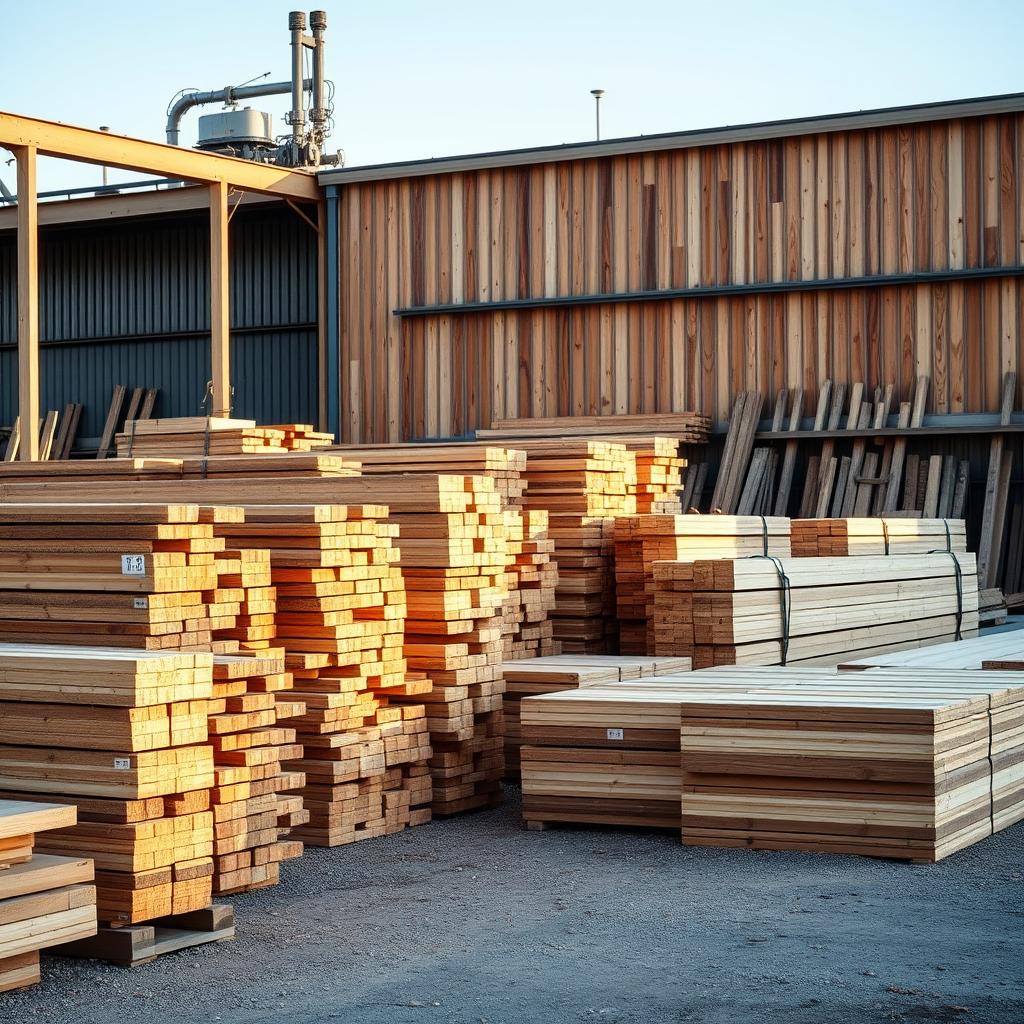
- Outdoor property — log decks, lumber packages, yard equipment
- Sawyers' & mill workers' workers' comp (class 2710)
- Pollution — boiler fuel, hydraulic oil, kiln combustion
Who it's for
- Stationary sawmills — band, circular, and planer mills
- Portable sawmill operators (Wood-Mizer, Lucas, similar)
- Custom sawyers serving local builders and landowners
- Mills with dry kilns (conventional and dehumidification)
- Lumber remanufacturers, planing mills, and treaters
Why CCA
Replacement cost on a mill that actually rebuilds
A fire in a sawmill doesn't just damage a building — it takes out the head rig, the edger, and the kiln, and the business stops. We write replacement-cost property with realistic business-income coverage so a fire doesn't end the business.
Equipment breakdown that covers the head rig
Boiler and machinery (equipment breakdown) coverage is critical for mills — it covers the electrical and pressure damage standard property excludes. We schedule the head rig, resaw, planer, and kiln as covered objects.
Class 2710 workers' comp under one roof
Sawmill workers' comp (class code 2710) is one of the higher-rated manufacturing codes. We quote it alongside your property and GL so the whole program is coordinated — and we apply the same EMOD strategy we use for logging crews.
Sawmill & Property Insurance, in plain English.
The coverages are similar (property, GL, workers' comp, equipment breakdown) but the property form differs. A portable mill moves between sites, so the equipment is insured on an inland marine floater rather than a fixed-location property form, and GL follows the operation wherever it's set up. We write both, depending on whether you're stationary, mobile, or both.
Yes — outdoor lumber packages and log decks are a real fire exposure and should be specifically scheduled on the property form. Stock coverage is written on either an actual-cash-value or replacement-cost basis (we model both), and high-value inventory should be reappraised annually as lumber prices move.
Class code 2710 covers sawmill or planing mill operations — the head rig, resaw, edger, planer, and kiln operations. It's one of the higher-rated manufacturing codes because of the amputation and struck-by exposures. We quote 2710 with the same EMOD review and specialty-market access we bring to logging class 2702.
Almost always yes. Equipment breakdown (formerly called boiler & machinery) covers electrical short circuits, motor burnout, and pressure-vessel failures — not just boilers. A band-mill motor failure or a kiln electrical fault is a covered loss under equipment breakdown and an exclusion under standard property.
Yes — and we usually recommend it. If you harvest timber and mill it, bundling logging workers' comp (2702), sawmill workers' comp (2710), logging equipment, mill property, and a coordinated GL/CPL program gives you one renewal date, one broker, and no gaps between the woods and the mill.
Related coverage
Ready to quote sawmill & property insurance?
Tell us about your operation — we'll come back with real markets in about a day.