
Insuring Your Car for Northern Arizona Winters & Elk Country
By Josh Cotner
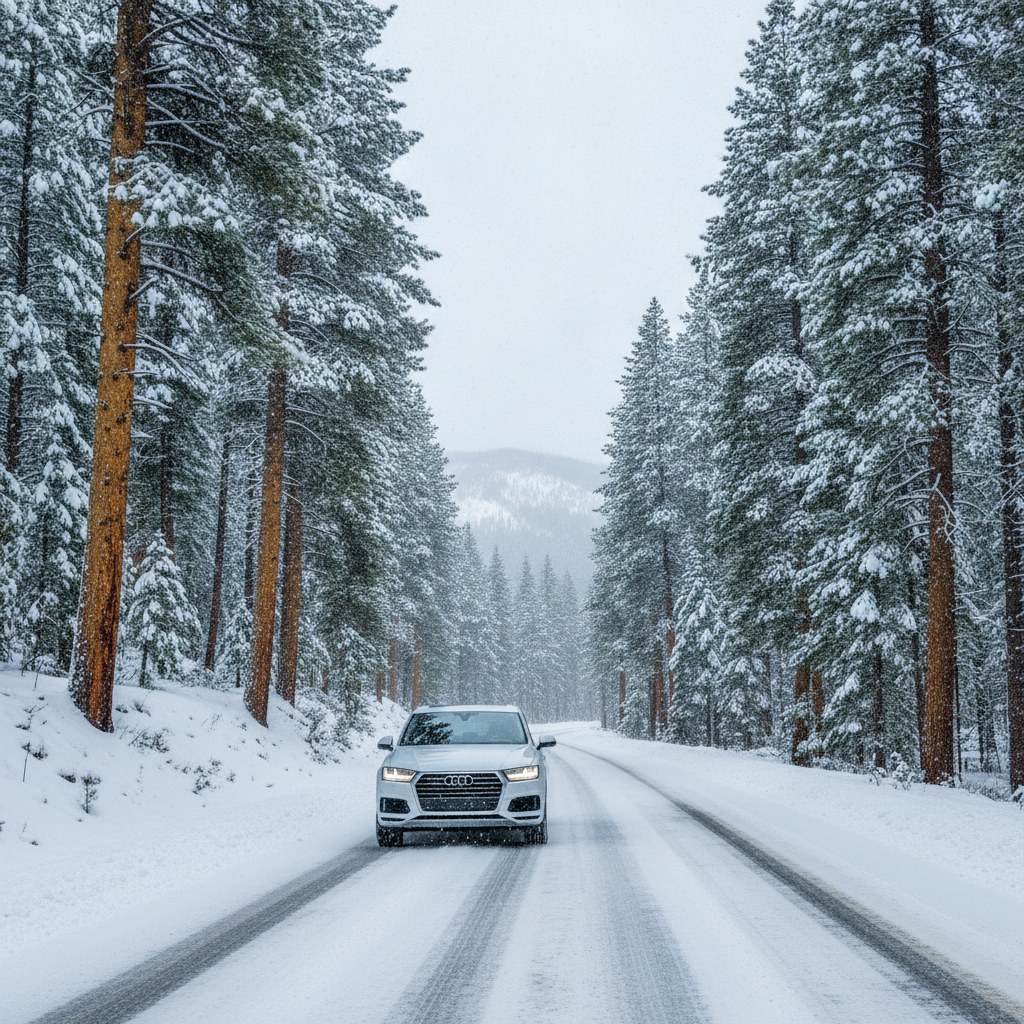
Driving in Northern Arizona is not like driving in Phoenix. Down the hill, the worst you'll deal with is heat and traffic. Up here at 7,000 feet, you've got snow-packed roads, black ice before dawn, the white-knuckle climb up I-17, and a very real chance that a 700-pound elk steps into your headlights on US-180 some evening in November.
Our roads ask more of your car and more of your insurance. Let's break down what Flagstaff-area drivers actually need so you're not caught short after a winter slide or an elk strike.
Winter Driving on I-17, US-180, and Lake Mary Road
If you commute or travel around Flagstaff, you know the trouble spots. The I-17 grade between Flagstaff and the Valley is notorious — it can be dry and 60 degrees in Camp Verde and a snowstorm at the top. US-180 toward the Snowbowl turns into a parade of out-of-towners with no snow experience every winter weekend. Lake Mary Road is dark, often icy, and full of wildlife.
Two hazards dominate up here:
- Snow and ice. Heavy snowfall, refreeze overnight, and slush that turns to glass when the temperature drops. Flagstaff is genuinely one of the snowiest cities in the country.
- Black ice. The sneaky one. Bridges, shaded curves, and that early-morning stretch of Lake Mary Road can be invisible-slick when everything else looks fine.
Good tires, slowing down, and leaving room are your first defense. But even careful drivers slide, get rear-ended, or slip off into a snowbank. That's where your auto policy earns its keep.
Elk and Deer: Comprehensive vs. Collision
Here's the question we get more than any other from Flagstaff drivers: if I hit an elk, which coverage pays?
The answer surprises people. Hitting an animal is covered under comprehensive, not collision. Even though it feels like a collision, insurance treats an animal strike as a comprehensive (or "other than collision") loss — the same category as theft, hail, fire, and a cracked windshield.
- Comprehensive pays when you hit an animal — an elk on US-180, a deer crossing Lake Mary Road, a stray cow on a forest road.
- Collision pays if you swerve to avoid an animal and hit something else — a guardrail, a tree, another car. Veering off the road to miss an elk and striking a ponderosa is a collision claim.
That distinction matters because the two coverages can have different deductibles, and many people carry one but not the other.
Why Comprehensive Coverage Really Matters Here
In elk country, comprehensive is not optional in any practical sense. Northern Arizona has a large, active elk population, and they move most at dawn and dusk — exactly when many of us are driving to and from work. An elk weighs as much as a small piano, and a strike can total a vehicle and seriously injure the people inside.
US-180, I-17 north of town, Lake Mary Road, and the routes around Munds Park and Mountainaire all see regular wildlife crossings. Watch for the warning signs — they're posted where collisions actually happen — and remember that where there's one elk, there are usually more.
If you only carry liability, an elk strike comes entirely out of your pocket. Comprehensive coverage means a manageable deductible instead of a totaled car you still owe money on. It also covers the windshield cracked by gravel on a forest road, the hail dent from a monsoon storm, and the tree branch that falls in a winter snow load.
For most Flagstaff drivers, the modest cost of full coverage is well worth it.
What to Do After a Winter Wreck or Animal Strike
When the worst happens, a clear head and a few steps protect both your safety and your claim:
- Get to safety. Pull off the road if you can, turn on hazards, and watch for traffic — secondary crashes on icy roads are common.
- Check for injuries and call 911 if anyone is hurt or if you've hit a large animal blocking the road.
- Document everything. Photos of the vehicles, the animal if present, road conditions, and the surrounding area. Snow, ice, and skid marks tell the story.
- Exchange information with any other drivers, and get a police or incident report number — especially helpful for elk strikes and single-vehicle slides.
- Don't admit fault at the scene. Stick to the facts and let the adjusters sort it out.
- Call your agent or carrier promptly to start the claim while details are fresh.
For an animal strike, the report and your photos help confirm it's a comprehensive claim. For a winter slide, conditions matter, so note the weather, the time, and the exact spot.
Coverage Tips for Flagstaff Drivers
A few adjustments make a real difference for Northern Arizona conditions:
- Carry comprehensive and collision, not just liability — especially with wildlife and snow in the mix.
- Pick deductibles you can actually afford to pay in a single bad week. A low comprehensive deductible stings less after an elk strike.
- Add roadside assistance and towing. A breakdown or slide-off on a remote stretch of Lake Mary Road in winter is no time to be stranded.
- Consider rental reimbursement. If your car is in the shop after an elk strike, this keeps you moving.
- Make sure your limits are adequate. A serious multi-car winter pileup on I-17 can generate big liability claims — don't carry bare-minimum limits.
- Glass coverage is cheap and handy given how much gravel and ice our roads throw at windshields.
Get Covered Before the First Snow
You can't control the elk on US-180 or the black ice on Lake Mary Road, but you can control how well you're protected when you meet them. The right auto policy turns a frightening night into a manageable claim.
At Lumberjack Insurance, we drive these same roads. We'll make sure you've got the comprehensive and collision coverage that Northern Arizona actually demands — without paying for stuff you don't need. Call us at 844-967-5247 for a free quote and a quick coverage check before winter rolls back in.
Need this coverage in Flagstaff?
Get a real quote fast — we shop multiple carriers to protect Flagstaff & Northern Arizona families and businesses.