
Home Insurance & Wildfire Risk in Flagstaff: What Every Homeowner Should Know
By Josh Cotner
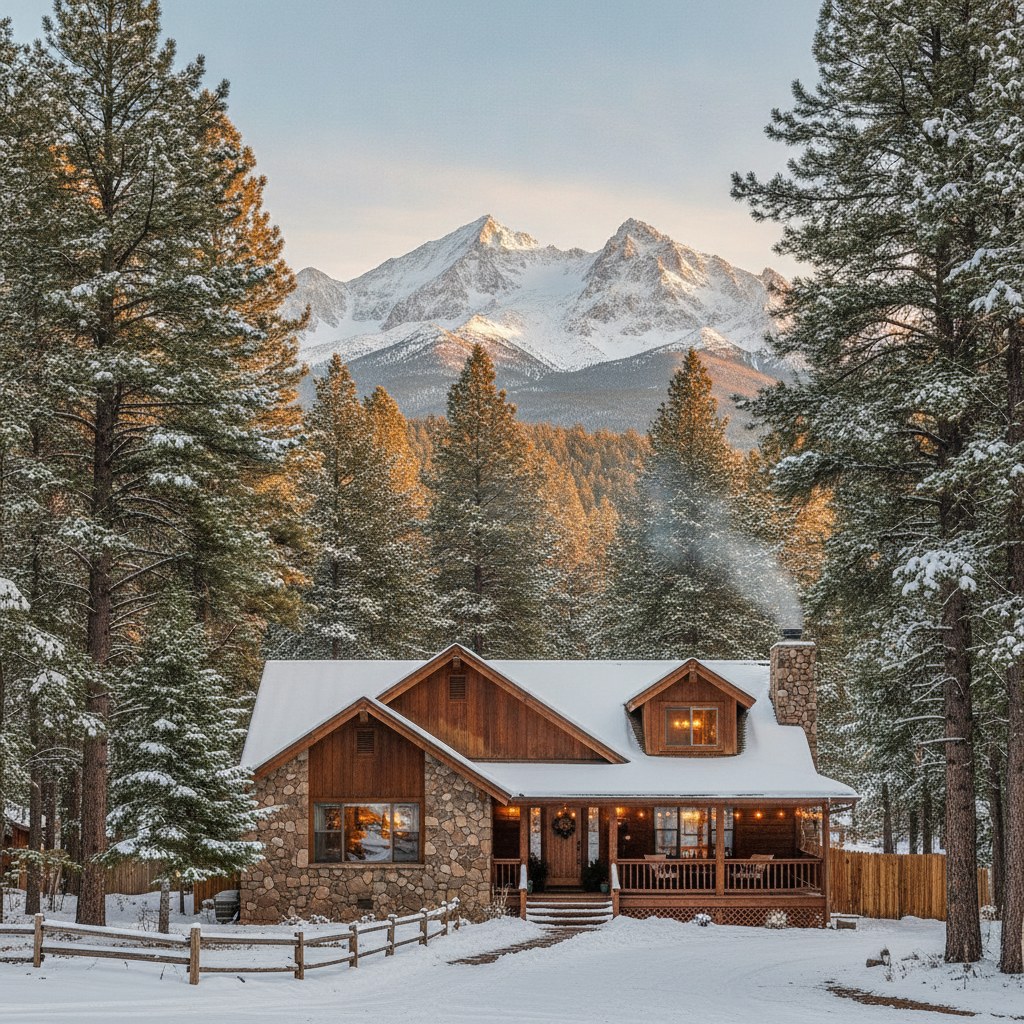
If you own a home in Flagstaff, you live in one of the largest contiguous ponderosa pine forests on the planet. It's stunning — the smell of warm pine on a summer afternoon, the San Francisco Peaks rising up behind town, the cool 7,000-foot air while the rest of Arizona bakes. But that same forest that makes Flagstaff special is also the single biggest factor in how insurance companies look at your home.
Wildfire risk has reshaped home insurance across the West, and Northern Arizona is squarely in the conversation. The good news: with the right policy and a little yard work, most Flagstaff homeowners can stay well-protected and insurable. Let's walk through how it actually works.
Why the Pine Forest Raises Your Exposure
Wildfire needs three things: fuel, dry conditions, and an ignition source. Flagstaff has all three in abundance during fire season.
The ponderosa pine forest is the fuel. After more than a century of fire suppression, many stands around town are denser than they were historically, with ladder fuels — small trees, brush, and dead needles — that let a ground fire climb into the canopy. Add a dry spring, low humidity, and the strong pre-monsoon winds we get in May and June, and conditions can turn dangerous quickly.
You don't have to look far for examples. Northern Arizona has lived through serious fire seasons in recent years, with blazes near Flagstaff forcing evacuations in neighborhoods like Doney Park, Fernwood, and areas off Highway 89. Fires like Tunnel, Pipeline, and Museum left lasting reminders that the wildland-urban interface — where homes meet untamed forest — is exactly where the risk concentrates.
If your home backs up to forest service land, sits on a slope, or is tucked into the trees in Kachina Village, Mountainaire, or Munds Park, you're in that interface. That's not a reason to panic. It's a reason to understand your coverage.
How Insurers Score Wildfire Risk
Insurance companies no longer guess about wildfire. They use detailed risk-scoring models that pull in satellite data, fuel maps, slope, historical fire behavior, and the distance from your home to dense vegetation.
A few things drive your score:
- Vegetation density and proximity. How much fuel surrounds the home, and how close it sits to the structure.
- Slope and terrain. Fire moves faster uphill, so homes on slopes often score higher.
- Access and water. Whether fire crews can reach your neighborhood and find hydrants or a water source.
- Defensible space. What you've done in the first 100 feet around the home.
- Roof and building materials. A Class A fire-rated roof and ember-resistant vents matter a lot.
Two homes a mile apart in Flagstaff can score very differently. The home with a cleared, well-maintained yard and a metal or asphalt-shingle roof is a far easier risk to insure than the one buried in untrimmed pines with a wood-shake roof.
What a Home Policy Actually Covers for Wildfire
Here's reassuring news: a standard homeowners policy (the HO-3 most Flagstaff homeowners carry) covers fire as a named peril — and that includes wildfire. If a wildfire damages or destroys your home, your policy is designed to respond.
A typical policy covers:
- The dwelling — your house and attached structures, up to your coverage limit.
- Other structures — detached garages, sheds, fences.
- Personal property — your belongings inside.
- Loss of use — additional living expenses if you're evacuated or your home is uninhabitable, like a hotel and meals while you're displaced. This one is huge during fire season, when evacuations can last days or weeks.
Unlike flood, wildfire is covered under the base policy. You do not need a separate "wildfire policy." What you do need is to make sure your limits are high enough to actually rebuild.
Rebuilding Cost vs. Market Value — Don't Confuse Them
This is where a lot of homeowners get caught. The price you could sell your home for is not the same as what it costs to rebuild it.
Construction costs in Flagstaff have climbed steadily — labor, lumber, the logistics of building at elevation, and stricter codes all push the number up. After a major wildfire, when many homes burn at once, demand for contractors and materials spikes, driving rebuild costs even higher. That's called demand surge.
Two things help here:
- Insure to full replacement cost, not market value. Your dwelling limit should reflect what a builder would charge to reconstruct your home today.
- Add extended or guaranteed replacement cost if your carrier offers it. This pads your limit by a percentage (often 25–50%) so a demand surge doesn't leave you short.
It's worth reviewing your dwelling limit every year or two. A home insured at last decade's rebuild cost can be dangerously underinsured today.
Defensible Space and Firewise — Your Best Insurance
The most powerful thing you can do isn't on the policy — it's in the yard. Creating defensible space genuinely lowers your wildfire risk and can keep your home insurable when carriers get cautious.
Flagstaff is an active Firewise community, and the basic principles are well worth following:
- Zone 0 (0–5 feet): Keep this immediate area lean. Move firewood piles, remove dead needles from the roof and gutters, and avoid flammable mulch right against the foundation.
- Zone 1 (5–30 feet): Thin trees and brush, prune lower branches up off the ground, and keep grass short.
- Zone 2 (30–100 feet): Reduce density, break up continuous fuels, and clear dead material.
Beyond the landscaping, harden the home itself: a fire-rated roof, ember-resistant vents, and keeping gutters and decks clear of debris. Many insurers now offer discounts or will keep covering homes that demonstrate this kind of mitigation.
Tips to Stay Insurable in Northern Arizona
The wildfire insurance market has tightened across the West, and some Flagstaff homeowners have seen non-renewals or steep increases. You can protect yourself:
- Do the mitigation and document it. Photos of cleared defensible space and a fire-rated roof help your case.
- Don't let coverage lapse. A gap makes you harder to re-insure.
- Work with an agent who knows the local market. When one carrier pulls back, another may still write the risk — but you need someone shopping the whole market for you.
- Bundle home and auto. It often improves both your rate and your odds of placement.
- Review your limits annually so you're never underinsured at rebuild time.
Talk to a Local Who Gets It
Wildfire isn't going away, but being underinsured or uninsured is a choice you can avoid. At Lumberjack Insurance, we live here too — we know the difference between Doney Park and downtown, what carriers want to see on a home in the trees, and how to keep you covered when the market gets jumpy.
Let's make sure your home is insured to rebuild, not just to sell. Call us at 844-967-5247 for a free, no-pressure quote and a quick review of your wildfire exposure. We'll help you protect the home you love in the forest we all do.
Need this coverage in Flagstaff?
Get a real quote fast — we shop multiple carriers to protect Flagstaff & Northern Arizona families and businesses.